Are we losing our capacity for compassion?
Unless we align ourselves with the greater narrative (work and story) of creativity, our capacity to be compassionate toward others is hindered. Alignment with the greater narrative however begins with carefully putting back together the pieces of our fragmented experience—not in any old way, but in a way that restores the beauty and integrity of the original masterpiece. But how?
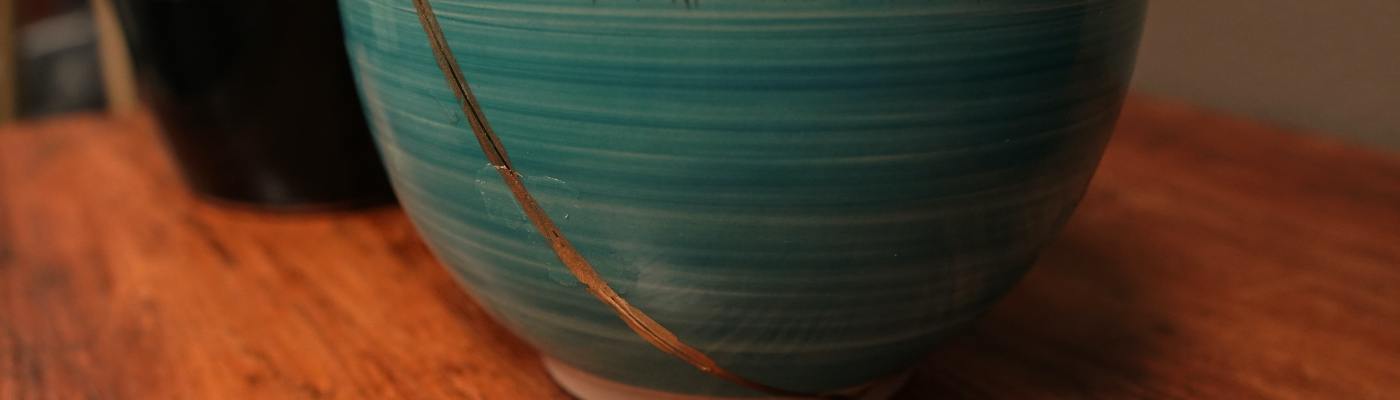
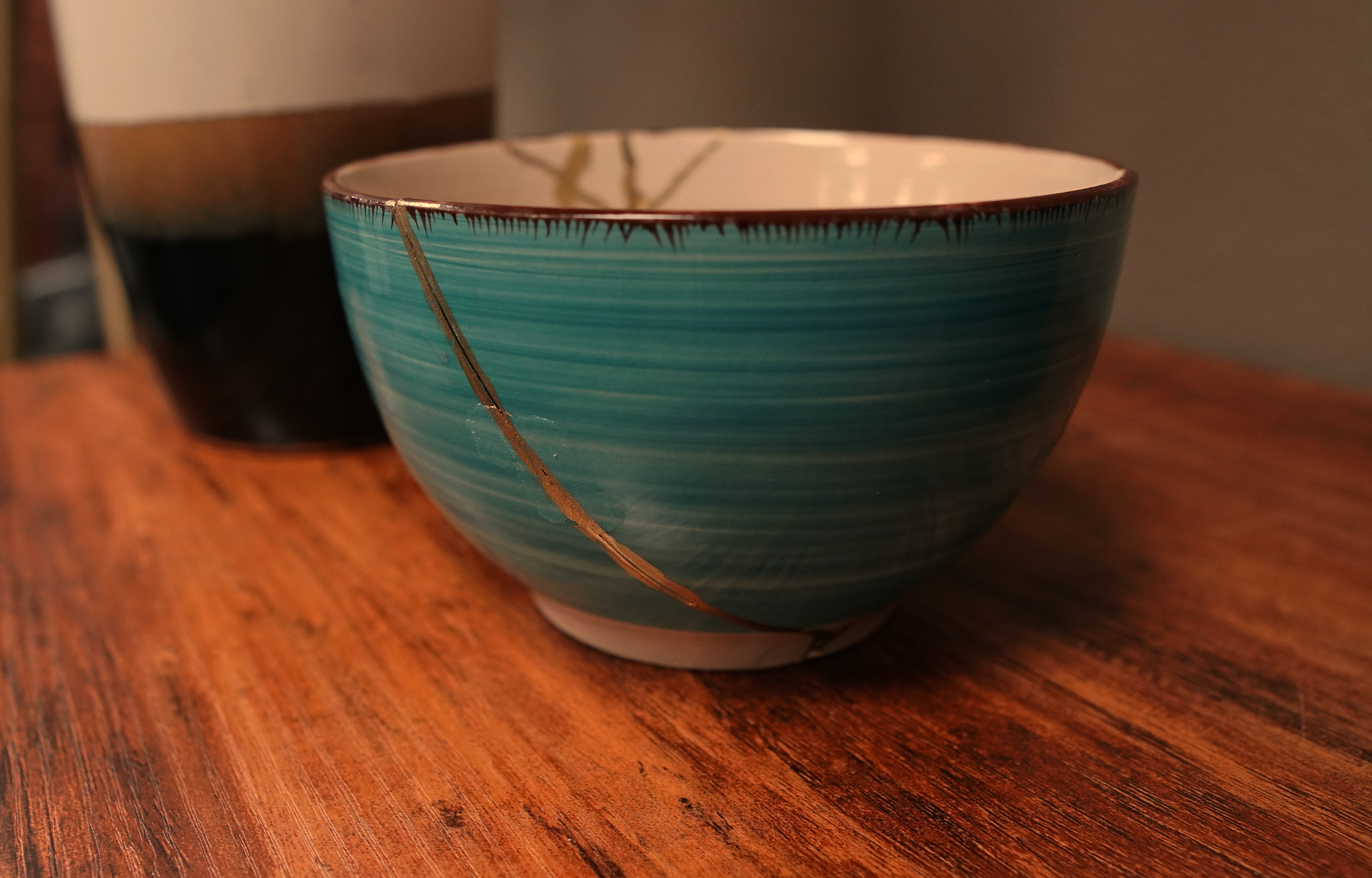
It begins with forgiveness—letting go of the burden of guilt and shame we carry on our shoulders by forgiving others and perhaps even ourselves for wrongs we may have experienced, even undeservedly. But isn’t this being unjust? Not really, if we entrust ourselves to the larger narrative of creativity, the bringing together of all the disparate pieces of our lives by something much greater than what we can imagine e.g., the potter’s hand in restoring the broken piece of pottery in the image above. This may not be justice the way in which we want to see it, but once we let go of our way of righting wrongs, then we open ourselves to perceiving and even ourselves becoming other beautiful possibilities that we may not have been in a position to see earlier prior to being broken. But this is hard.
Surely, some things are impossible with human strength alone. We might be able to mend pots but not human hearts and minds, not society as a whole. But here’s where creativity is more than a “thing.” Rather, it is a real alignment between our inner beings and abilities and the greater narrative of being created, and thereby, creative in accordance with our (individual and collaborative) created beings, i.e., the way in which we are created to be creative in the first place, which is good and beautiful and pure. This is not assumed through blind faith but rather embraced through experiencing the beauty of the world around us and as revealed through all people everywhere, if we are willing to see that. But how can we return to realigning our everyday creativity with the greater narrative of our creativity?
As we surrender ourselves to the larger work of creative restoration, when we turn from reliance upon ourselves and genuinely seek to learn and to play our part in the grand narrative of creativity being played out in the world, then we begin to experience the journey of transformation from arrogance (insisting on our own way) to compassion (serving the needs of others before our own). We thereby arrive at a place where we earn the privilege to extend our creativity-in-the-process-of-restoration to others. This is a shared and ongoing process between creatives and the world. A creative ecosystem doesn’t happen overnight. In the end, a restored piece of art–individual and social system–speaks volumes especially in ways that might have been unthinkable prior to the work of restoration, and certainly very different from the original created work! When we give up trying to be creative but rather succumb to the work of the potter, then compassion as beauty unveiled speaks for itself. This is creativity.
The foundation for trust therefore is forgiveness as a way of life. It is extended, received, anticipated, and ongoing. After all while we are made beautiful, we are all cracked pots after all!
Consider,
What does it mean for me to step down from my position of power in my home and work and begin to step into something new and beautiful? Who do I need to forgive today?

